
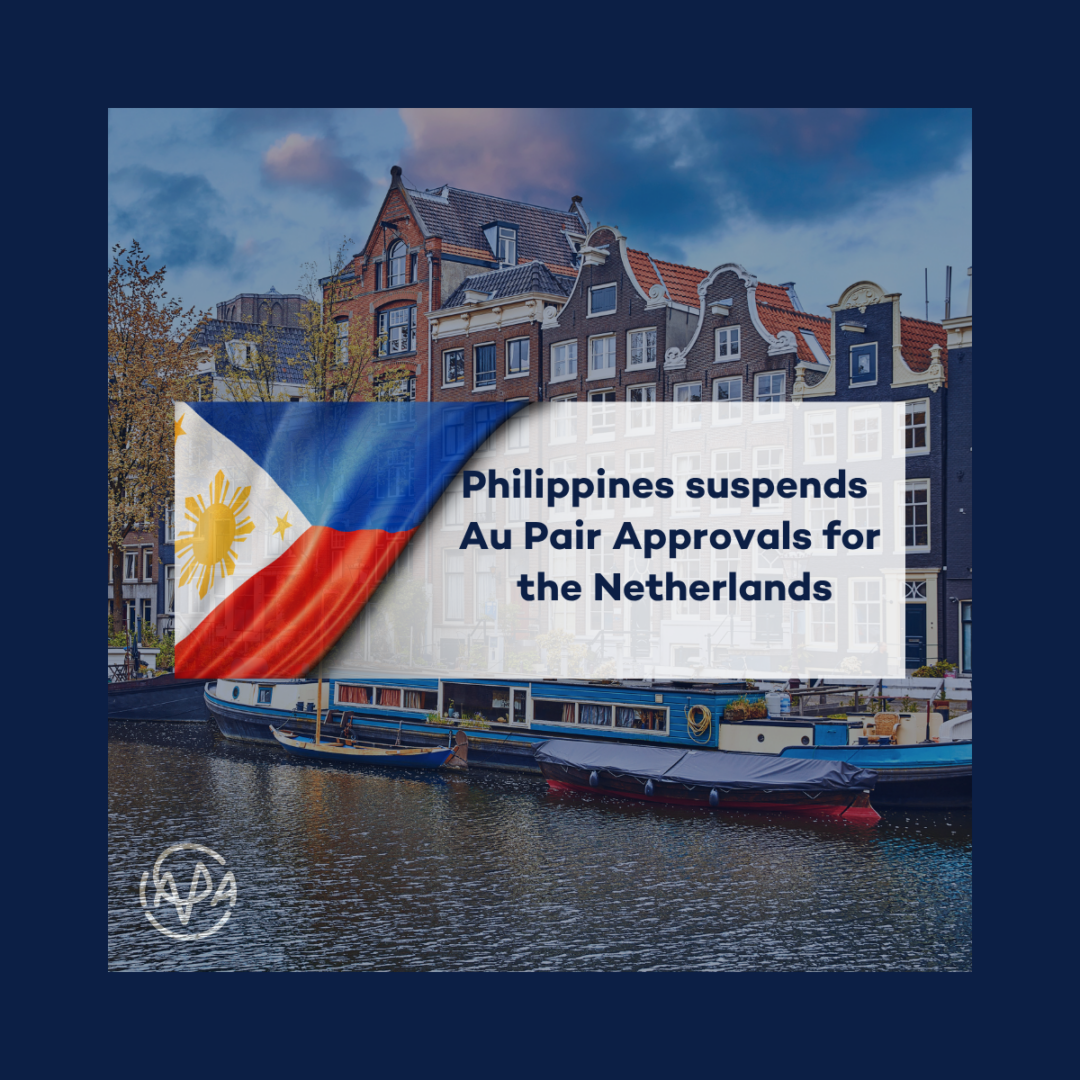
Philippines Suspends Au Pair Approvals for the Netherlands
The Philippine Embassy in The Hague has announced that it will suspend the notarization and approval of new au pair contracts for Philippine nationals travelling directly from the Philippines to the Netherlands, effective 1 July 2026. Read the official statement
This development affects a significant segment of the Dutch cultural exchange system. According to Dutch Immigration and Naturalisation Service (IND) statistics, Filipino nationals account for approximately 36% of au pairs in the Netherlands, making them the largest nationality group within the programme. See also IND au pair statistics.
Reasons Cited by the Philippine Authorities
According to statements from the Philippine authorities, the suspension follows an ongoing review of the au pair program due to repeated complaints raised by participants.
The concerns cited include:
• Alleged excessive working hours beyond permitted limits
• Allowances reportedly below required minimum standards
• Cases where au pairs are reportedly used primarily as domestic workers or full-time childcare providers rather than participating in cultural exchange
Existing contracts will continue to be processed until 30 June 2026.
The restriction applies only to individuals departing directly from the Philippines. Filipino nationals already residing in other countries with valid residence permits are not affected.
Broader Context
This decision is not without precedent. The Philippines has previously introduced restrictions affecting au pair pathways to several European countries, including Germany, France, and Switzerland, and has at times adjusted or paused participation in similar cultural exchange programmes.
Compared to many other sending countries, where procedures are primarily handled through the visa and sponsorship system of the destination country, the Philippine system includes a higher level of pre-departure regulation and government involvement.
The Philippines applies a structured system for nationals participating in overseas programmes. Au pair placements require formal documentation, registration, and approval before a contract can be finalised and departure is permitted. This process includes a mandatory training component, the (Contry Familiarisation Seminar CFS).
A key part of the process is consular authentication carried out by Philippine embassies or consulates in the country of destination, which is required before contracts can proceed. This is what has now been suspended.
Find more details on the process on the page of the Commission for Filippinos Overseas (CFO).
Regulatory Framework in the Netherlands
The Dutch au pair programme operates under a structured and regulated sponsorship system. Participation is only possible through recognised sponsoring agencies, which are subject to oversight by the Dutch Immigration and Naturalisation Service (IND).
Key features of the system include:
• Mandatory sponsorship by recognised agencies
• Defined limits on working hours
• Fixed financial allowance requirements
• Immigration monitoring and compliance obligations
• Formal rules ensuring the cultural exchange nature of the stay
These safeguards are designed to ensure clarity of responsibilities and protection for both au pairs and host families.
While no system is immune to individual cases of non-compliance, the Dutch framework is widely regarded as a highly structured model within the European context, with enforcement mechanisms built into both agency licensing and immigration supervision.
Diversity and Regulated Cultural Exchange
For ongoing cases involving au pair candidates from the Philippines, the priority is to finalise applications within the applicable timeframe ahead of 1 July 2026.
This development highlights the importance of maintaining a broad range of recruitment countries to support accessible cultural exchange opportunities worldwide.
IAPA and its member organisations continue to support well-regulated au pair programmes based on clear rules, shared responsibilities, and cooperation between agencies and public authorities, including proper screening and preparation of both au pairs and host families, as well as appropriate support and monitoring during the stay.
We hope that access to cultural exchange opportunities for young people from the Philippines can be restored in the future, alongside continued dialogue on how to ensure effective participant protection within these programmes.